(2021) Tokyo Junkie
60 years of Bright Lights and Back Alleys… and Baseball
An American journalist’s memoir about Tokyo’s modern urban transformation, its criminal underworld and, oh yes, baseball.
Tokyo Junkie is a memoir that plays out over the dramatic 60-year growth of the megacity Tokyo, once a dark, fetid backwater and now the most populous, sophisticated, and safe urban capital in the world.
Follow author Robert Whiting (The Chrysanthemum and the Bat, You Gotta Have Wa, Tokyo Underworld) as he watches Tokyo transform during the 1964 Olympics, rubs shoulders with the Yakuza and comes face to face with the city’s dark underbelly, interviews Japan’s baseball elite after publishing his first best-selling book on the subject, and learns how politics and sports collide to produce a cultural landscape unlike any other, even as a new Olympics is postponed and the COVID virus ravages the nation.
(2017) The Book of Nomo
When Hideo Nomo took the mound for the Los Angeles Dodgers against the San Francisco Giants on May 2, 1995, few fans in North America expected much success from the Japanese pitcher. He quickly proved the doubters wrong, winning six consecutive games to go along with more than 100 strikeouts — and that was in just the first two months of his rookie season.
By the end of his inaugural campaign, Nomo compiled a 16-6 record with an ERA of 2.54, and led the National League with 236 strikeouts. And while he wasn’t the first Japanese-born player to don a big-league uniform (pitcher Masanori Murakami had a brief, experimental stint with the San Francisco Giants in the 1960s), Nomo was his country’s first permanent major-leaguer.
Yet, despite his high-profile accomplishments on the mound, Nomo remained a mystery to his teammates, the media, and the fans. Only a handful of confidants ever really knew what made the taciturn hurler tick. Robert Whiting, author of You Gotta Have Wa, shares his insider’s understanding of the tremendous risks Nomo took for a shot at the big leagues; how he blazed a trail for players like Ichiro Suzuki, Hideki Matsui, Masahiro Tanaka and Yu Darvish who followed him; and why he never, ever looked back.
(2004) The Meaning of Ichiro
Ichiro…Nomo…Hasegawa…Hideki Matsui…one by one they have come to America and made their mark as incredibly gifted and popular ballplayers. But this new wave of athlete-led by the sensational Ichiro Suzuki, whom many refer to as the best all-around player-is just the tip of a fascinating iceberg. Illuminating a deep and very different tradition of baseball, Whiting shows why more Japanese players will be coming to America…and how they will forever transform the way our game is played.
Grandly entertaining and deeply revealing, The Samurai Way of Baseball is a classic book about sports, business, and stardom-in a world that is changing before our eyes.
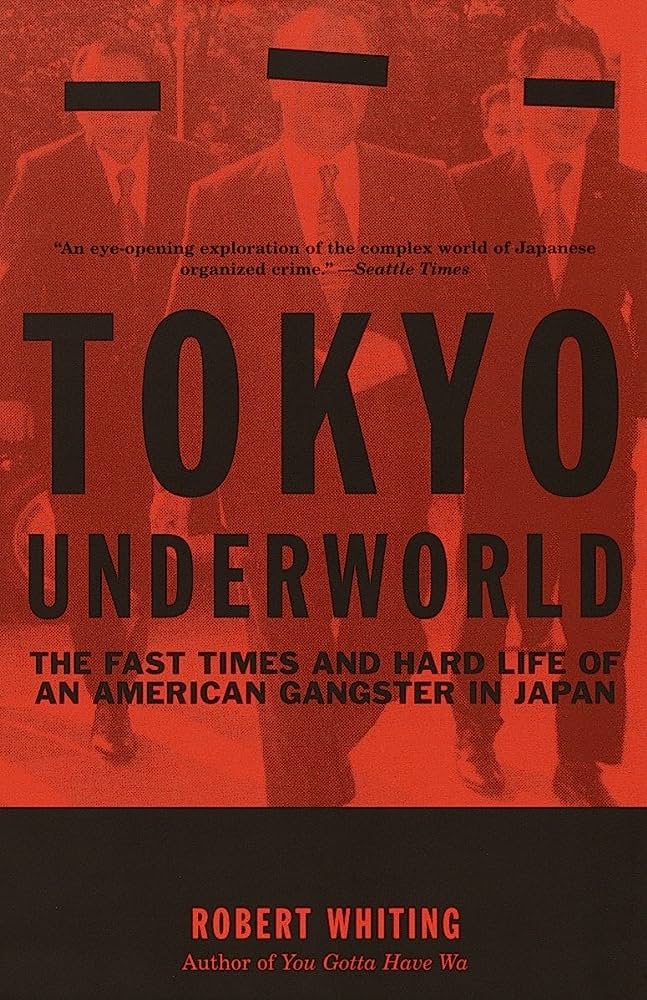
(1999) Tokyo Underworld
Through the eyes of Nick Zappetti, a former GI, former black marketer, failed professional wrestler, bungling diamond thief who turned himself into “the Mafia boss of Tokyo and the king of Rappongi,” we meet the players and the losers in the high-stakes game of postwar finance, politics, and criminal corruption in which he thrived. Here’s the story of the Imperial Hotel diamond robbers, who attempted (and may have accomplished) the biggest heist in Tokyo’s history. Here is Rikidozan, the professional wrestler who almost single-handedly revived Japanese pride, but whose own ethnicity had to be kept secret. And here is the story of the intimate relationships shared by Japan’s ruling party, its financial combines, its ruthless criminal gangs, the CIA, American big business, and perhaps at least one presidential relative. Here is the underside of postwar Japan, which is only now coming to light.
(1991) Slugging it Out in Japan
Black, headstrong, and opinionated, Warren Cromartie hardly seemed the likely choice to play baseball in Japan. He was a loner. He was also a slugger. During his fifth year with the Tokyo Giants he was named most valuable player, and his teammates voted unanimously that he not retire. This is the triumphant story of Cro’s sometimes angry, sometimes humorous, introduction to the Japanese way of doing things; the values and idiosyncrasies which are a part of the Japan of today.

(1989) You Gotta Have Wa
In Japan, baseball is a way of life. It is a philosophy. It is besuboru. Its most important element is wa–group harmony–embodied in the proverb “The nail that sticks up shall be hammered down.” In this witty and incisive book, Robert Whiting gives us a close-up look at besuboru‘s teams, obsessive ritualism, and history, as seen through the eyes of American players who found the Japanese approach–rigorous pregame practices, the tolerance for tie games, injured pitchers encouraged to “pitch through the pain”–completely baffling. With vivid accounts of East meeting West, involving Babe Ruth, Ichiro Suzuki, Bobby Valentine, Japanese home run king Sadaharu Oh, and many others, this lively and completely unique book is an utter gem and baseball classic.

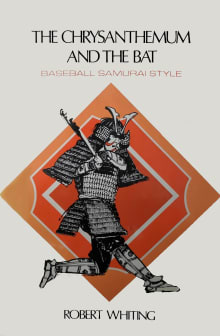
(1977) The Chrysanthemum and the Bat: Baseball Samurai Style
.
 Tokyo Junkie